ONLY ZERO CARBON ONLY ZERO CARBON ONLY ZERO CARBON ONLY ZERO CARBON ONLY ZERO CARBON ONLY ZERO CARBON
Science
The climate change science of zero carbon is definite, because of the definite basic science of carbon dioxide in the atmosphere. Carbon dioxide lasts in the atmosphere after it has been emitted for an extremely long time.
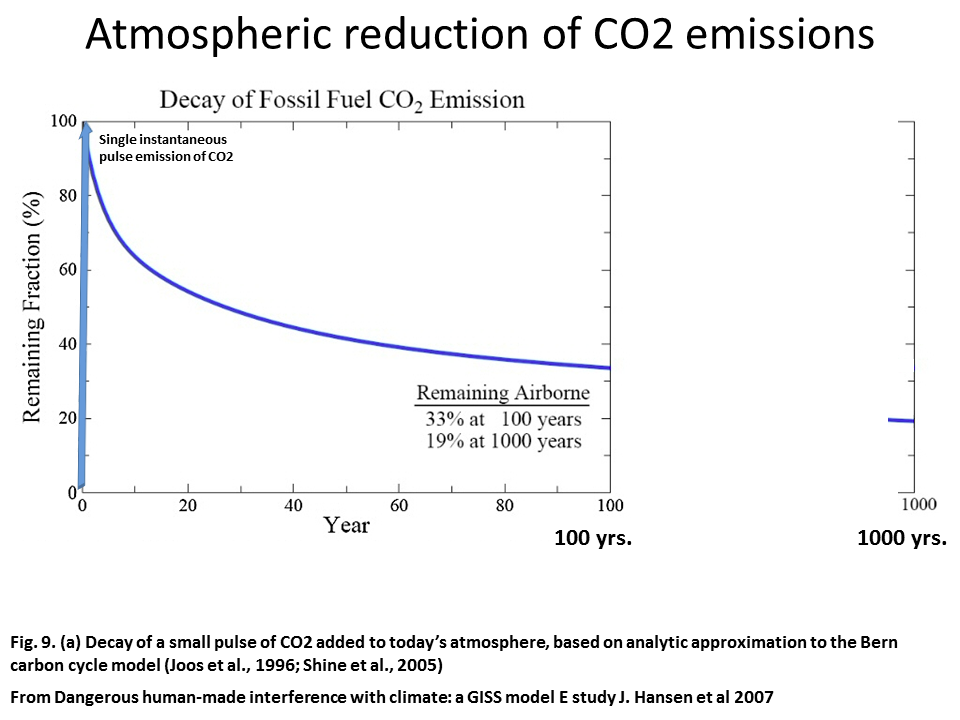
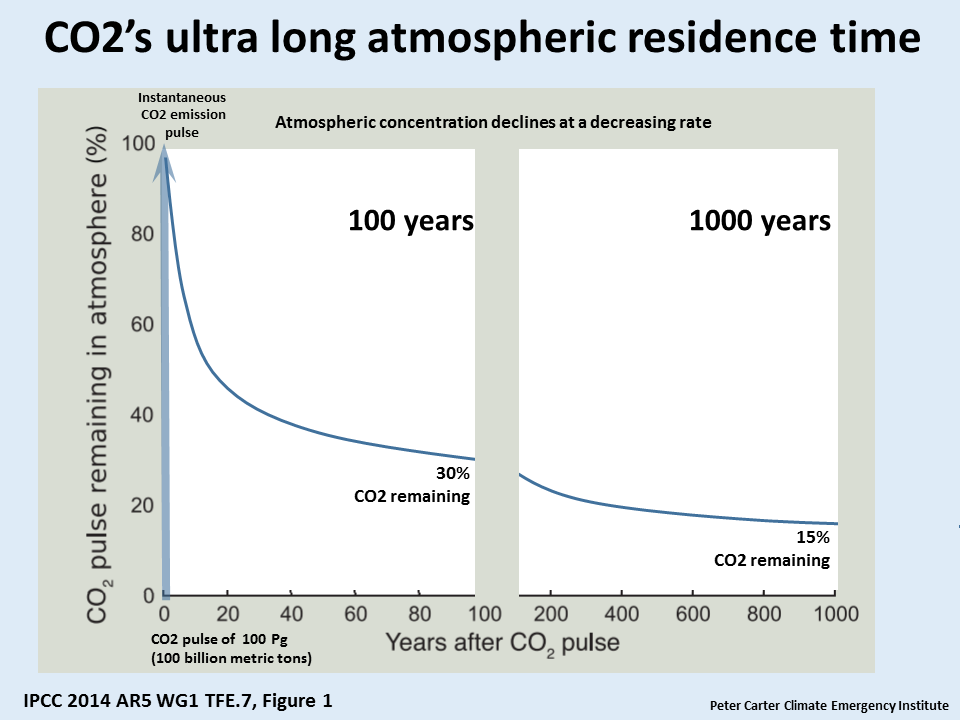
The mean atmospheric life time of CO2 is 50 to 100 years, but 33% lasts 100 years and the IPCC says 20% lasts 1000 years. This makes CO2 emissions extremely persistent and so cumulative in the atmosphere.
Research published in 2007 (after IPCC assessment) Long term fate of anthropogenic carbon, that included some carbon feedback, found about 75% of CO2 emissions have an average perturbation lifetime of 1800 years and 25% have lifetimes much longer than 5000 years and the average perturbation lifetime of atmospheric CO2 is much longer than the 300–400 years proposed by other studies.
Research published in 2007 (after IPCC assessment) Long term fate of anthropogenic carbon, that included some carbon feedback, found about 75% of CO2 emissions have an average perturbation lifetime of 1800 years and 25% have lifetimes much longer than 5000 years and the average perturbation lifetime of atmospheric CO2 is much longer than the 300–400 years proposed by other studies.
Therefore global climate total planetary catastrophe is inevitable unless carbon emissions is dropped to zero. This means converting off fossil fuel energy and onto clean zero carbon everlasting energy sources which are abundant.
The science was established 20 years ago by the the Intergovernmental Panel on Climate Change (IPCC) that an elevated level of atmospheric carbon dioxide would not drop unless carbon dioxide emissions dropped to zero.
This is why 350.org is demanding an emergency climate change and zero, and response from all nations. The last 2007 assessment of the IPCC stated that the atmospheric carbon dioxide concentration could not be stabilized without dropping emissions to zero. Further research since the IPCC 2007 assessment has confirmed that only zero carbon dioxide emissions can stop the global temperature from continuing to rise. The 2014 IPCC AR5 assessment says that carbon emissions must drop to 'about zero' this century.
This is why 350.org is demanding an emergency climate change and zero, and response from all nations. The last 2007 assessment of the IPCC stated that the atmospheric carbon dioxide concentration could not be stabilized without dropping emissions to zero. Further research since the IPCC 2007 assessment has confirmed that only zero carbon dioxide emissions can stop the global temperature from continuing to rise. The 2014 IPCC AR5 assessment says that carbon emissions must drop to 'about zero' this century.
The same science applies to ocean acidification, which cannot stop increasing unless the atmospheric carbon dioxide concentration stops increasing and that means no more CO2 added to the atmosphere. Ocean acidification cannot stop increasing without zero carbon emissions.
National Research Council
on zero
on zero
There are two scientifically definite imperatives
for zero carbon emissions.
There is global warming and climate change-
and there is also ocean acidification.
Today's (2015) atmospheric CO2 is 400 ppm which is a 20 million year high. Consequently ocean acidification is at the 20 million year high.
We can understand zero carbon science from what we know.
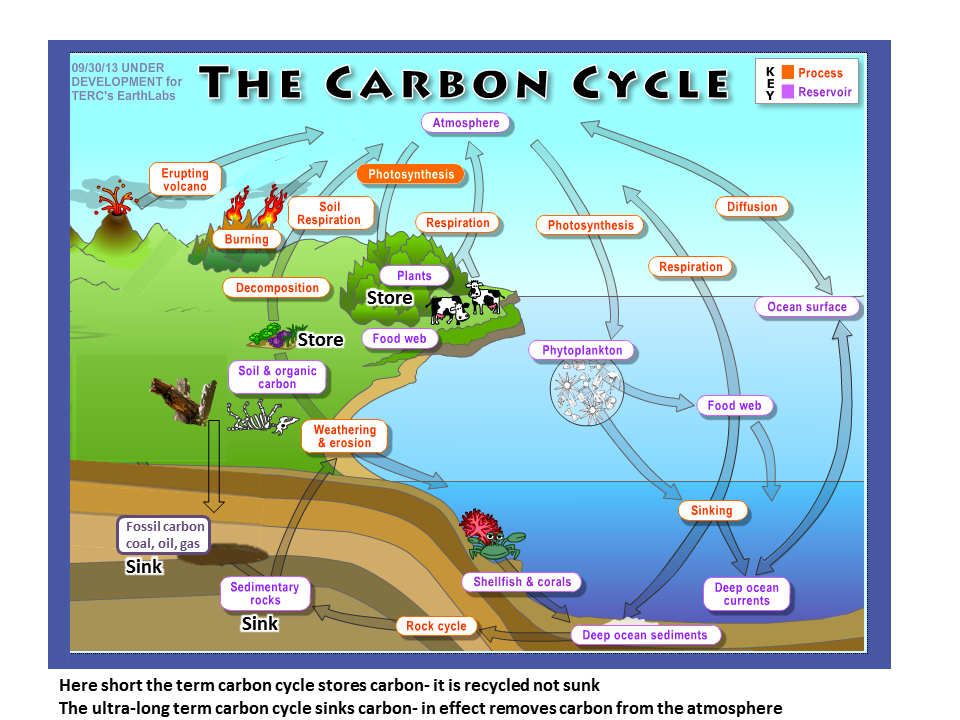
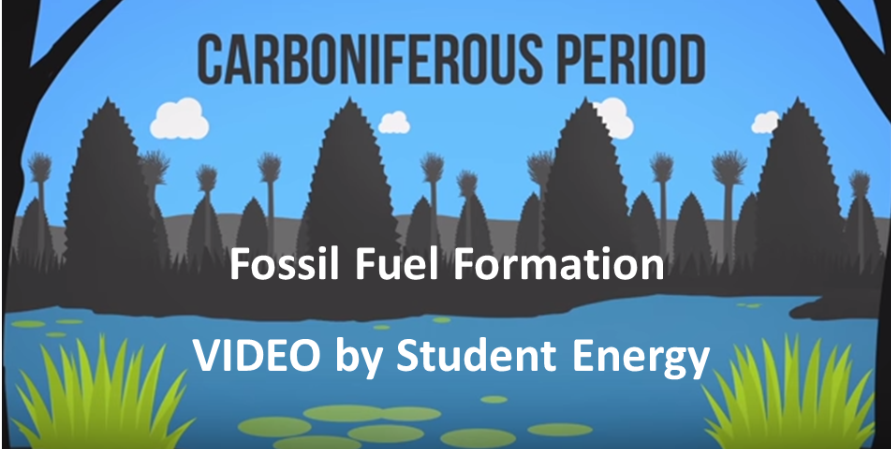
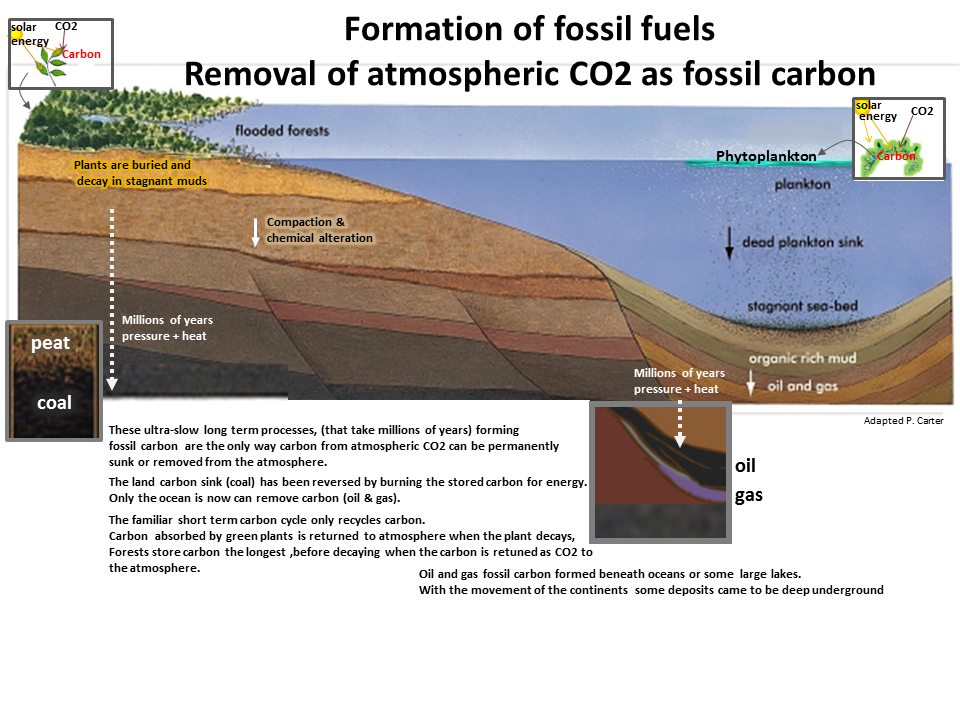
We know the formation of coal oil and gas takes millions of years.
We know that permanently removes CO2 from the atmosphere.
There is no other way to remove CO2 from the atmosphere.
The fact of the science is that forests take up atmospheric CO2 and then put the CO2 back through death and decay. That is why it is called a carbon CYCLE.
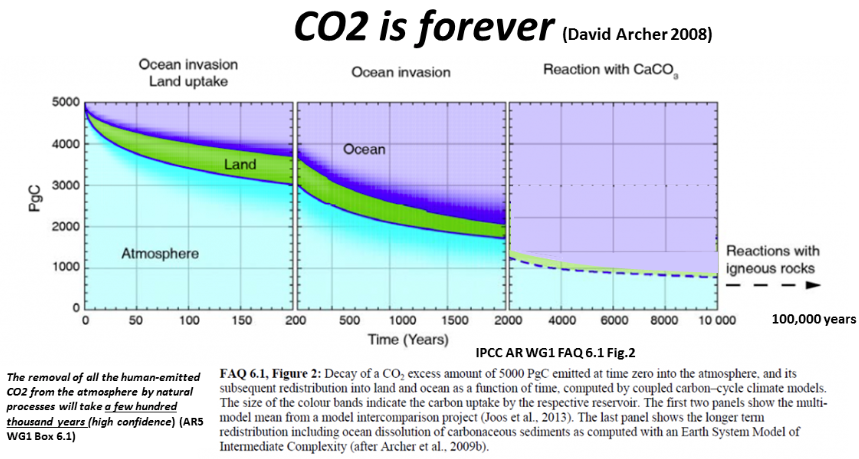
'The removal of all the human emitted CO2 from the atmosphere will take a few hundred thousand years' (IPCC AR5 WG1 Box 6.1)
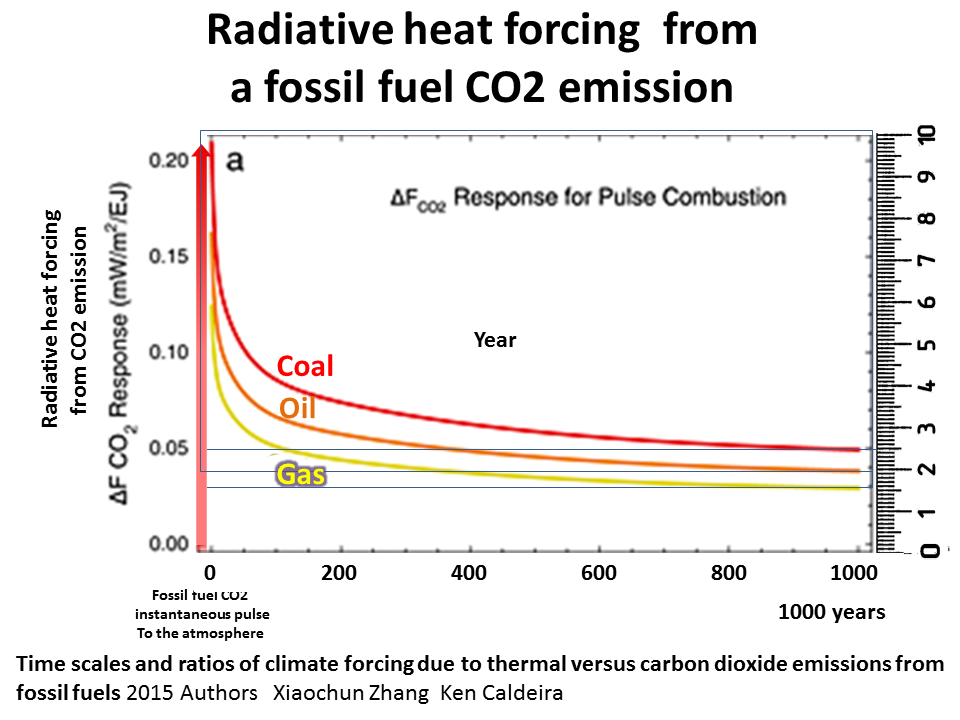
If it takes millions of years to form coal oil and gas it is no surprise that it takes 100,000 years to permanently remove the CO2 of fossil fuel emissions, and that 1000 years after a CO2 emission a quarter of the CO2 is still in the atmosphere.
Research shows there is little difference between coal, oil or natural gas in this respect.
Since 2009 the climate science has focused on a new idea- the so-called allowable carbon budget. As it is only based on a good chance of meeting the catastrophic 2C target it is a formula for planetary catastrophe. The carbon budget leads to zero carbon, but its proponents assume that can be achieved by a large reliance on carbon capture and storage (CCS) of fossil fuel energy. CCS is still unproven and can never get us near to zero production. If the formula is applied to 1.5C (which is still globally disastrous)we have 6 years of burning carbon at today's rate.
The real budgetary emergency & myth of "burnable carbon" May 2014 David Spratt.
Aubrey Meyer carbon budget and on line tool.
Understanding global warming and climate change means understanding why it is a fact that global warmingn and ocean acidification cannot stabilize, unless carbon dioxide emissions are dropped to zero.
This means converting all fossil fuel energy to clean zero carbon and everlasting energies- that can provide many times the energy the world needs.
Stopping burning fossil fuels does not reduce only CO2 emissions, because fossil fuel emissions increase black carbon (soot) ground level ozone and methane.
for zero carbon emissions.
There is global warming and climate change-
and there is also ocean acidification.
Today's (2015) atmospheric CO2 is 400 ppm which is a 20 million year high. Consequently ocean acidification is at the 20 million year high.
We can understand zero carbon science from what we know.
We know the formation of coal oil and gas takes millions of years.
We know that permanently removes CO2 from the atmosphere.
There is no other way to remove CO2 from the atmosphere.
The fact of the science is that forests take up atmospheric CO2 and then put the CO2 back through death and decay. That is why it is called a carbon CYCLE.
'The removal of all the human emitted CO2 from the atmosphere will take a few hundred thousand years' (IPCC AR5 WG1 Box 6.1)
If it takes millions of years to form coal oil and gas it is no surprise that it takes 100,000 years to permanently remove the CO2 of fossil fuel emissions, and that 1000 years after a CO2 emission a quarter of the CO2 is still in the atmosphere.
Research shows there is little difference between coal, oil or natural gas in this respect.
Since 2009 the climate science has focused on a new idea- the so-called allowable carbon budget. As it is only based on a good chance of meeting the catastrophic 2C target it is a formula for planetary catastrophe. The carbon budget leads to zero carbon, but its proponents assume that can be achieved by a large reliance on carbon capture and storage (CCS) of fossil fuel energy. CCS is still unproven and can never get us near to zero production. If the formula is applied to 1.5C (which is still globally disastrous)we have 6 years of burning carbon at today's rate.
The real budgetary emergency & myth of "burnable carbon" May 2014 David Spratt.
Aubrey Meyer carbon budget and on line tool.
Understanding global warming and climate change means understanding why it is a fact that global warmingn and ocean acidification cannot stabilize, unless carbon dioxide emissions are dropped to zero.
This means converting all fossil fuel energy to clean zero carbon and everlasting energies- that can provide many times the energy the world needs.
Stopping burning fossil fuels does not reduce only CO2 emissions, because fossil fuel emissions increase black carbon (soot) ground level ozone and methane.
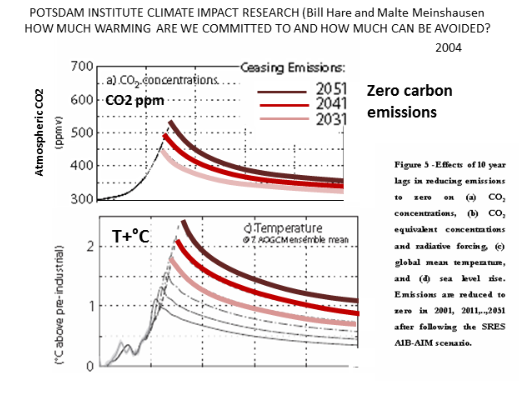
Today's atmospheric carbon dioxide concentration is over 405 ppm and is rising fast. To avoid planetary catastrophe, it has to be dropped below 350 ppm. The science has been definite for many years the atmospheric carbon dioxide cannot start to drop unless industrial carbon dioxide emissions are stopped- that's zero carbon.
Even virtual zero carbon emissions (like 90%) would not quite stabilize global warming, nor ocean acidifcation long term.
But zero carbon emissions STARTING NOW could actually bring us to 1.5C.
We can achieve zero carbon emissions by adding some so called 'negative emissions' to virtual zero.
That means taking some CO2 out of the air and securing it out of the carbon cycle and to some extent that is possible.
Even virtual zero carbon emissions (like 90%) would not quite stabilize global warming, nor ocean acidifcation long term.
But zero carbon emissions STARTING NOW could actually bring us to 1.5C.
We can achieve zero carbon emissions by adding some so called 'negative emissions' to virtual zero.
That means taking some CO2 out of the air and securing it out of the carbon cycle and to some extent that is possible.
The science of getting below 350 ppm CO2 or stabilizing global climate
and ocean acidifcation at all- ever
and ocean acidifcation at all- ever

New Research
June 2015 Time scales and ratios of climate forcing due carbon dioxide emissions from fossil fuels
Nov 2013 Even if emissions stop, carbon dioxide could warm Earth for centuries
June 2015 Time scales and ratios of climate forcing due carbon dioxide emissions from fossil fuels
Nov 2013 Even if emissions stop, carbon dioxide could warm Earth for centuries

VIDEO CO2 bathtub analogy
Changing the Chemistry
of the Atmosphere (Dr H. Hummel 2009)
of the Atmosphere (Dr H. Hummel 2009)
Short version
bathtub analogy
bathtub analogy
Interactive animation UCAR
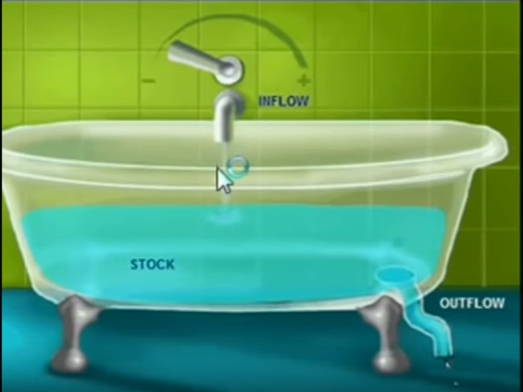
CO2 emissions bathtub analogy
CO2 emissions bathtub analogy
The removal of all human-emitted CO2 from the atmosphere by natural processes will take a few hundred thousand years -
high confidence (IPCC 2014 AR5 WG1 Box 6.1
high confidence (IPCC 2014 AR5 WG1 Box 6.1
Interactive of illustration below